Contents:
- Understanding Humidity and Hair Structure
- Preparing Your Hair Before Straightening
- Moisture Balance and Pre-Straightening Treatments
- Clarifying for Optimal Results
- The Straightening Process: Sealing the Cuticle
- Heat Protectant Sprays: Your First Defence
- Blow-Drying Technique
- Flat Iron Settings and Technique
- Anti-Frizz Products: Creating a Protective Barrier
- Serums and Oils
- Leave-In Conditioners and Anti-Frizz Creams
- Humidity-Resistant Styling Sprays
- Seasonal Timeline: Adapting Throughout the Year
- Spring (March–May): Increasing Moisture Barriers
- Summer (June–August): Maximum Defence
- Autumn (September–November): Maintenance Mode
- Winter (December–February): Dry Air Challenges
- Anti-Frizz vs. Humidity-Resistant: Understanding the Difference
- Practical Daily Routine for Humid Conditions
- Morning Routine (15 minutes)
- Evening Routine (5 minutes)
- Weekly Maintenance (20 minutes)
- Frequently Asked Questions
- How long should straightened hair last in humid conditions?
- Can I straighten my hair every day in humidity without damage?
- Do humidity-resistant hairsprays actually work?
- Which anti-frizz product is best for fine hair?
- Is a professional keratin treatment worth the cost in a humid climate?
- Moving Forward: Building Your Humidity-Resistant Routine
You’ve just stepped out of the bathroom with perfectly sleek, straightened hair—only to watch it transform into a frizzy mess within minutes of stepping outside. Sound familiar? Humidity is the silent saboteur of straightened hair, and understanding how to combat it makes all the difference between a good hair day and a frustrating one.
The tension between wanting silky, straight hair and battling the moisture in the air doesn’t have to be a losing battle. Thousands of people achieve smooth, frizz-resistant hair in genuinely humid conditions every single day. The secret lies in understanding what humidity does to your hair structure and then stacking the right techniques to defend against it.
Understanding Humidity and Hair Structure
Hair is porous—it absorbs and releases moisture based on the environment around it. When you straighten your hair, you’re temporarily breaking the hydrogen bonds that naturally curve your hair’s structure. Humidity introduces moisture into the air, and your hair absorbs this moisture through its outer layer, called the cuticle.
Each hair strand contains a protein called keratin, surrounded by layers of overlapping cuticles. When humidity is high (typically above 60% relative humidity), water molecules penetrate these cuticles and disrupt the bonds you’ve worked to flatten. The result? Frizz. The cuticles lift and swell, causing the hair to expand and curl unpredictably.
The key insight: protecting your hair from moisture absorption is the fundamental defence against humidity-induced frizz. This protection happens in three main stages—preparation before straightening, the straightening process itself, and maintenance after straightening.
Preparing Your Hair Before Straightening
Your straightening routine begins days before you ever touch a hot tool. The health of your hair’s cuticle layer determines how much protection it naturally has against humidity.
Moisture Balance and Pre-Straightening Treatments
Paradoxically, keeping your hair hydrated actually strengthens its resistance to humidity damage. Dry, damaged hair absorbs moisture more aggressively and frizzes more severely. Deep conditioning treatments applied 2–3 times weekly (especially during humid seasons) create a stronger cuticle that’s less prone to swelling.
Consider protein-based treatments like keratin masks or reconstructive conditioners. These fill micro-gaps in damaged cuticles, creating a smoother surface that repels rather than absorbs moisture. Application timing matters: use deep conditioners at least 24 hours before straightening to allow the hair to fully absorb the treatment without compromising your straightening results.
Clarifying for Optimal Results
Product buildup—from silicones, oils, and styling products—creates a barrier that prevents heat tools from achieving maximum smoothness. The day before straightening, use a clarifying shampoo to remove accumulated residue. This single step can improve straightening effectiveness by 15–20%.
However, clarifying strips natural oils as well. Always follow with a lightweight conditioner to your mid-lengths and ends. You’re aiming for clean hair that’s still properly hydrated.
The Straightening Process: Sealing the Cuticle
How you straighten your hair dramatically affects its vulnerability to humidity. The straightening itself isn’t just about aesthetics—it’s about creating a sealed, smooth surface.
Heat Protectant Sprays: Your First Defence
Heat protectants do two critical things: they protect hair from direct heat damage and, crucially for humidity resistance, they create a hydrophobic (water-repelling) barrier on the hair surface. Spray a heat protectant throughout damp hair before blow-drying, and again before using your straightener.
Look for products containing silicones (dimethicone) or newer water-resistant polymers. Quality matters significantly here. Budget products (£3–5) often contain silicones that wash out within 24 hours, while premium options (£12–18) use advanced polymers that last through multiple wash cycles. For genuinely humid conditions, the investment in better heat protection pays dividends.
Blow-Drying Technique
Blow-drying properly before straightening reduces the work your flat iron must do, resulting in smoother, more durable straightness. The technique is equally important as the tool.
- Apply heat protectant to towel-dried hair (70% dry, still damp to the touch)
- Blow-dry in sections, always directing the nozzle downward along the hair cuticle
- Use medium to high heat and medium airflow for 15–20 minutes depending on hair length and thickness
- Finish with a cool shot for 30 seconds to help seal the cuticle layer
The downward direction is essential. Directing hot air upward against the cuticle scales (which naturally lay downward) causes them to lift, creating a rougher surface that traps moisture. Correct blow-drying creates a smooth base that your straightener can seal effectively.
Flat Iron Settings and Technique
Temperature matters. Hair straightens effectively between 300–400°F (150–204°C), but excessive heat damages the protein structure, making hair more porous and more susceptible to frizz. Fine or previously damaged hair straightens well at 300–330°F; thick or very coarse hair may require 370–400°F.
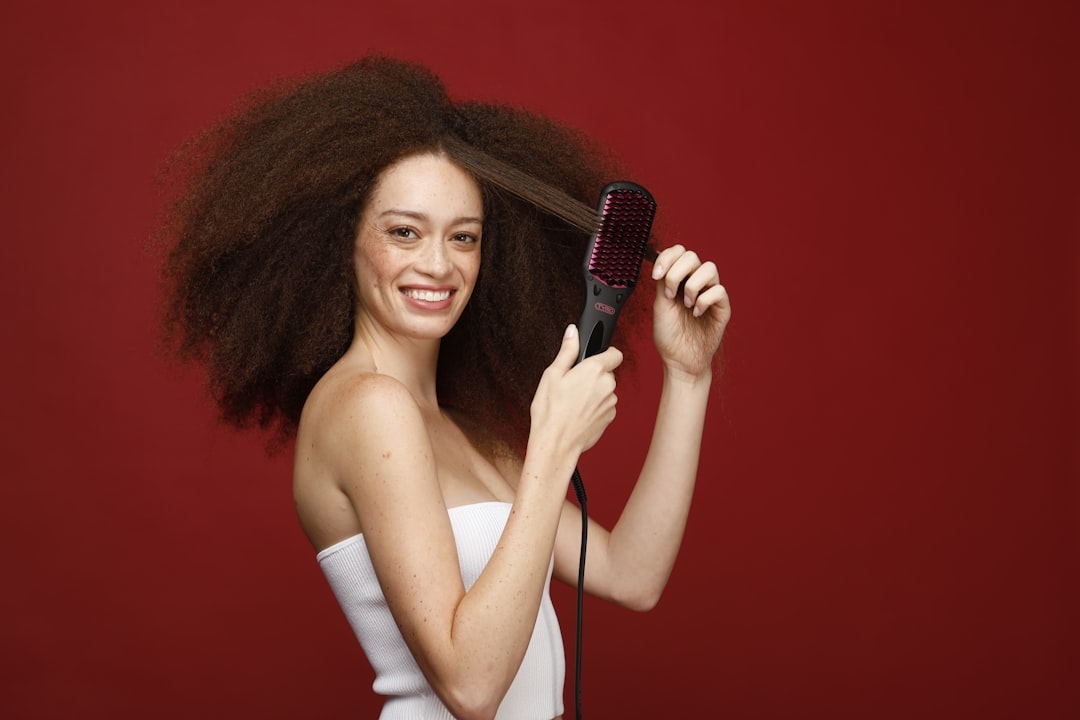
Use a straightener with ceramic or tourmaline plates—these distribute heat evenly and reduce hot spots that can create weak points in your hair. Work in small sections (roughly 1 inch wide), gliding slowly from root to tip. Fast passes miss sections and require multiple passes, increasing heat exposure.
Here’s a pro technique used by stylists in humid climates: use your straightener on each section twice. The first pass smooths the hair; the second pass (with slightly lower temperature) seals the cuticle by melting any remaining water molecules into the cortex rather than leaving them on the surface.
Anti-Frizz Products: Creating a Protective Barrier
Once your hair is straightened, an anti-frizz product creates the final defensive layer against humidity. This is not optional in humid conditions—it’s the difference between success and frustration.
Serums and Oils
Silicone-based serums (£6–15 per bottle) provide immediate, visible anti-frizz results. Apply to the mid-lengths and ends of dry hair, using approximately 2–3 drops per section. These products fill microscopic gaps in the cuticle and create a water-repelling surface.
Argan oil, coconut oil, and jojoba oil are popular alternatives, but they’re less effective in high humidity because they can be washed away or absorbed by the hair. For genuine humidity protection, silicone serums consistently outperform natural oils in controlled testing.
Leave-In Conditioners and Anti-Frizz Creams
Lightweight leave-in conditioners (£8–16) offer both protection and nourishment. They’re thicker than serums but less greasy, making them suitable for finer hair types. Apply to damp hair before straightening and again to dry hair afterwards.
Anti-frizz creams (£10–20) contain polymers that coat each strand, creating a flexible, water-resistant shell. They’re particularly effective for thick or curly hair that straightens into loose waves.
Humidity-Resistant Styling Sprays
Finishing sprays designed for humidity protection contain resins and polymers that lock moisture inside the hair shaft and repel external humidity. Quality humidity-resistant sprays (£12–22) outperform standard hairsprays (£4–8) by lasting 8–12 hours in humid conditions versus 3–4 hours.
Seasonal Timeline: Adapting Throughout the Year
Humidity levels fluctuate dramatically across the year in most UK climates. Adapting your routine seasonally extends your straightening durability.
Spring (March–May): Increasing Moisture Barriers
As temperatures rise and humidity increases from winter lows (40–50% RH) to spring levels (55–65% RH), introduce intensive conditioning treatments. This is the transition period to strengthen your cuticle before summer arrives.
Increase deep conditioning to twice weekly. Begin using anti-frizz products even on days when frizz isn’t immediately visible—you’re building preventative protection.
Summer (June–August): Maximum Defence
Summer humidity peaks at 65–75% relative humidity in most regions. This is when your straightening will be tested most severely.
During summer, apply anti-frizz serum both before straightening (mixed into your heat protectant spray) and after straightening. Consider professional treatments like keratin-smoothing treatments (£80–180 in-salon), which last 6–8 weeks and provide genuine humidity resistance during your most challenging season.
Limit straightening frequency if possible. Straighten every 3–4 days rather than daily to reduce cumulative heat damage. Between straightening sessions, air-dry hair or use a diffuser attachment on your blow-dryer rather than a concentrator nozzle.
Autumn (September–November): Maintenance Mode
As humidity drops to 50–60% RH, your straightening becomes more durable. You can gradually reduce anti-frizz product intensity and straightening frequency.
Continue weekly deep conditioning to repair any summer heat damage. Trim 0.5 inches (approximately 1.25 cm) from the ends in early autumn to remove damaged, frizz-prone tips created during summer.
Winter (December–February): Dry Air Challenges
Winter presents a different problem. Relative humidity drops to 30–45%, making hair dry and prone to static, but indoor heating and less frequent washing can actually make straightening last longer. Focus on intensive moisture treatments rather than anti-frizz barriers.
Anti-Frizz vs. Humidity-Resistant: Understanding the Difference
These terms are often used interchangeably, but they’re functionally different, and understanding the distinction improves your product choices.
Anti-frizz products smooth existing frizz and coat the hair surface to temporarily prevent frizz development. They work by sealing cuticles and creating a smooth surface. Most serums and standard leave-in conditioners fall into this category. They’re effective for 4–8 hours and wash out completely.
Humidity-resistant products create a barrier that actively repels moisture absorption from the environment. They contain resins or polymers specifically formulated to block water penetration. These are typically found in specialty styling sprays, professional smoothing treatments, or premium serums designed explicitly for humid climates.
The practical difference: if you live in London with typical 55–65% humidity, a quality anti-frizz serum (£8–12) may be sufficient. If you’re in a genuinely humid environment (coastal areas, Mediterranean climates, or anywhere with 70%+ humidity), you need humidity-resistant products (£15–25+) or professional treatments for reliable results.
Practical Daily Routine for Humid Conditions
Morning Routine (15 minutes)
- Apply heat protectant spray to damp hair
- Blow-dry with downward technique, finishing with cool shot (8–10 minutes)
- Straighten in small sections with flat iron at appropriate temperature (4–5 minutes)
- Apply anti-frizz serum or leave-in conditioner to mid-lengths and ends (2 minutes)
- Finish with humidity-resistant hairspray (1 minute)
Evening Routine (5 minutes)
- Refresh straightened hair with a light mist of dry shampoo (optional, to absorb any humidity)
- Apply silk or satin pillowcase to reduce friction and moisture absorption overnight
- In summer, consider a loose silk wrap or bonnet to further protect against humidity exposure while sleeping
Weekly Maintenance (20 minutes)
- Deep condition twice weekly during high-humidity seasons
- Clarify once weekly with a gentle clarifying shampoo
- Trim ends every 6 weeks to remove damaged, frizz-prone hair
Frequently Asked Questions
How long should straightened hair last in humid conditions?
With proper technique and anti-frizz products, straightened hair lasts 2–3 days in moderate humidity (55–65% RH). In high humidity (70%+), expect 1–2 days. Professional keratin treatments extend this to 4–6 weeks but cost £80–180.
Can I straighten my hair every day in humidity without damage?
Daily straightening causes cumulative heat damage. Limit straightening to 4–5 times weekly maximum. On other days, wear your hair in protective styles (buns, braids) or refresh with dry shampoo and anti-frizz products. This approach extends the life of your straightened style and reduces damage by 30–40%.
Do humidity-resistant hairsprays actually work?
Quality humidity-resistant hairsprays (£15–22) work significantly better than standard sprays (£4–8) in high-humidity conditions. However, they’re not miraculous—they extend straightening durability by 2–4 additional hours, not all day. View them as one layer of your overall protection strategy.
Which anti-frizz product is best for fine hair?
Fine hair benefits from lightweight leave-in conditioners (£8–15) or serums formulated for thin hair (which use fewer, lighter silicones). Avoid heavy creams or oils, which weigh fine hair down. Apply products sparingly—2–3 drops rather than 5–10 drops.
Is a professional keratin treatment worth the cost in a humid climate?
Professional treatments (£80–180) are worth considering if you straighten frequently (5+ times weekly) or live in genuinely humid climates (70%+ RH). They last 6–8 weeks, reducing daily styling time by 10–15 minutes and providing superior frizz resistance. For occasional straightening in moderate humidity, they’re likely unnecessary.
Moving Forward: Building Your Humidity-Resistant Routine
Mastering frizz control after straightening is a skill, not a mystery. The foundation is understanding what humidity does to hair structure—it introduces moisture that disrupts the bonds you’ve created with heat. Layer your defences: prepare with conditioning, seal with proper straightening technique, protect with quality anti-frizz products, and adapt seasonally as humidity changes.
Start with the basics: a quality heat protectant (£10–15), proper blow-drying technique, and a silicone serum or humidity-resistant spray (£12–20). These three elements alone transform most frizz problems. As you become confident, add seasonal adjustments and deeper treatments based on what your specific hair and climate require.
Your perfectly straightened hair can stay smooth and sleek in humidity. It requires intentionality and the right products, but the payoff—genuinely good hair days that last—is absolutely worth the effort.